

TPE Pillow Review: Pros, Cons, And What Buyers Should Know
Oct 20, 2026
Leave a message
Introduction: Is a TPE Pillow Worth Considering?
When evaluating a new pillow category, buyers need more than attractive product images or general comfort claims. They need to understand the material, product design, maintenance requirements, quality standards, and suitability for their target market.
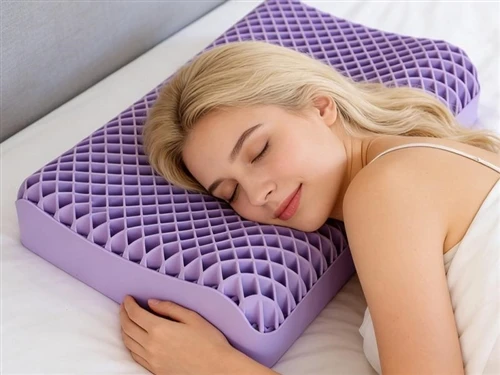
A TPE pillow, made from thermoplastic elastomer (TPE), is an alternative to conventional pillows made from memory foam, polyester fiber, or other cushioning materials. Many TPE pillows feature an open-grid or honeycomb structure designed to combine elastic support with airflow through the pillow core.
For bedding brands, importers, wholesalers, and private-label businesses, the key question is not simply whether a TPE pillow feels comfortable. It is whether the product meets customer expectations, satisfies applicable market requirements, and can be manufactured consistently at commercial volumes.
This review examines the potential advantages and limitations of TPE pillows, explains how they compare with memory foam alternatives, and outlines the quality and sourcing factors buyers should evaluate before placing a bulk order.
What Is a TPE Pillow?
Thermoplastic elastomer is a class of materials that combines elastic behavior with the processing characteristics of thermoplastics. Its specific properties depend on the formulation, material grade, and manufacturing process.
In pillow manufacturing, TPE can be molded into interconnected grids, honeycomb patterns, and other three-dimensional structures. These designs influence how the pillow deforms under pressure, responds to movement, and allows air to pass through its core.
Three factors are particularly important when evaluating a TPE pillow:
Material formulation: The composition and hardness of the TPE influence flexibility, resilience, and tactile feel.
Structural design: Grid geometry, wall thickness, and the overall shape determine how the core responds to loading.
Product configuration: Pillow height, dimensions, surface design, and cover materials affect the finished product's usability.
A TPE pillow should therefore be evaluated as a complete product rather than judged by material name alone. Two pillows made from TPE may deliver different experiences because their formulations and structures differ.
TPE Pillow Pros and Cons
Understanding both the advantages and limitations of TPE pillows helps buyers determine whether the category fits their product portfolio.
Potential Advantages of TPE Pillows
Elastic response and recovery
TPE structures can deform under pressure and recover when the load is removed. This responsive behavior may appeal to customers who prefer a pillow that feels more elastic than traditional cushioning foam. Actual recovery performance should be verified through product testing.
Open-grid ventilation
Many TPE pillows use interconnected openings that allow air to move through the core. This structure can support ventilation around the head and neck. However, the actual thermal experience also depends on the grid design, pillow cover, bedding, and surrounding environment.
Flexible design possibilities
Molding allows manufacturers to develop different shapes, heights, grid patterns, and support configurations. These options give bedding brands opportunities to develop products for different price segments and customer preferences.
Potential for easier maintenance
Depending on the material formulation and product construction, a TPE core may be washable with water. Buyers should confirm the manufacturer's cleaning instructions and test the complete product configuration, including its cover and any additional components.
Potential Limitations to Consider
Firmness may not suit every customer
Some customers prefer a soft, sinking sensation, while others prefer a more responsive structure. TPE pillows may not appeal equally to all users, making sample evaluation important before a brand commits to a particular design.
Structure affects performance
A grid that is too flexible, too rigid, or poorly suited to the intended pillow dimensions may not provide the desired support. Material selection alone cannot guarantee an appropriate sleeping experience.
Weight and packaging require evaluation
The finished weight depends on the material quantity, core dimensions, structure, and cover. These factors affect carton planning, freight calculations, handling, and retail packaging decisions.
Unit cost depends on product specifications
Material grade, mold requirements, product dimensions, order quantity, packaging, and customization can all influence the final quotation. Buyers should compare equivalent specifications rather than making decisions based on unit price alone.
Overall, TPE pillows offer useful product-development possibilities, but their commercial suitability depends on how well the design matches the intended customer and market.
TPE Pillow vs. Memory Foam Pillow
TPE and memory foam serve overlapping needs in the bedding market, but their material behavior and product construction differ.
| Evaluation factor | TPE Pillow | Memory Foam Pillow |
|---|---|---|
| Material behavior | Elastic response, depending on formulation | Viscoelastic response, depending on formulation |
| Common construction | Molded grid, honeycomb, or other structures | Molded foam, cut foam, or layered designs |
| Response to pressure | Often designed for relatively quick recovery | Often designed for slower, contouring recovery |
| Airflow | Open-grid designs can provide airflow channels | Depends on foam structure, perforations, and cover |
| Cleaning | Follow the specified care instructions; some cores can be rinsed | Care requirements vary; many foam cores should not be immersed |
| Design development | Grid geometry, molded shape, and material formulation | Foam density, contour, thickness, and formulation |
Neither material is automatically superior for every application. A brand targeting customers who prefer responsive support may evaluate TPE designs, while a brand focused on contouring comfort may continue to favor memory foam.
For buyers developing a new collection, the most useful comparison is based on approved samples, measurable specifications, customer feedback, and the intended retail price range.
How to Evaluate TPE Pillow Quality
Before selecting a supplier, buyers should establish clear acceptance criteria. The following checks help turn subjective product impressions into a more consistent evaluation process.
Material specifications and documentation
Request the relevant material specifications and available safety or compliance documents. Confirm that the documentation applies to the actual material, product configuration, and intended sales market. Do not assume that every TPE formulation has identical properties or certifications.
Dimensions and weight consistency
Check the finished pillow's length, width, height, and weight against the approved specification. Define acceptable tolerances before production so that both parties understand the requirements for batch acceptance.
Grid integrity and molding quality
Inspect the core for incomplete sections, irregular wall thickness, visible defects, and unwanted deformation. The grid should match the approved sample and drawing.
Compression and recovery performance
Agree on a suitable test method, compression conditions, recovery period, and acceptance criteria. Where durability is important to the product positioning, evaluate performance after repeated loading rather than relying only on an initial hand-press test.
Odor and surface condition
Inspect samples for unusual odors, surface contamination, inconsistent coloration, or visible manufacturing defects. If the target market requires specific chemical or emissions testing, confirm the applicable method and supporting documentation.
Cover compatibility and cleaning requirements
The cover should fit the core appropriately and meet the intended product's functional and appearance requirements. If the pillow is marketed as washable, verify the approved cleaning method and evaluate the relevant components under those conditions.
For repeat orders, buyers should retain an approved reference sample, document inspection results, and agree on a consistent quality-control process with the manufacturer.
What Should Buyers Check Before Placing a Bulk Order?
Product quality is only one part of a successful sourcing decision. Commercial buyers also need to understand development costs, production planning, packaging, and order execution.
Sample Approval and Product Specifications
Before mass production, confirm the pillow's dimensions, height, firmness target, grid structure, cover, labeling, and packaging. Any changes after sample approval should be documented to prevent misunderstandings.
Customization and Private Label Options
Ask which elements can be customized, such as product shape, dimensions, structural design, cover fabric, logo, label, and retail packaging. Confirm whether customization requires a new mold, additional development fees, or a minimum order quantity.
MOQ, Pricing, and Tooling Costs
Request a quotation based on clearly defined specifications and order quantities. Separate recurring product costs from one-time development or tooling charges where applicable. This makes it easier to compare suppliers and calculate expected margins.
Production Lead Time and Capacity
Confirm sample lead time, tooling schedules, production lead time, and the supplier's ability to accommodate repeat orders. Capacity should be assessed against the required quantity, specifications, and delivery schedule rather than general production claims.
Inspection and Shipment Planning
Agree on inspection stages, sampling procedures, defect classifications, packaging standards, carton dimensions, and shipping marks. Buyers should also clarify how nonconforming products will be handled.
These steps help reduce specification disputes and make repeat purchasing more predictable.
How RINA Supports TPE Pillow Development and Manufacturing
For buyers who require customized TPE pillows, a manufacturer's development and production capabilities can influence both product differentiation and supply consistency.
Zhejiang Rina Home Technology Co., Ltd. develops and manufactures TPE sleep products, including TPE pillows and related bedding products. Its manufacturing operations cover TPE material processing, molding, assembly, quality inspection, and packaging.
These capabilities support several stages of a buyer's project.
Product development and mold customization
RINA can work with buyers to evaluate product dimensions, shapes, and structural requirements for customized pillow projects. Where a design requires new tooling, the development scope and related costs should be confirmed before the project proceeds.
Manufacturing process coordination
Material processing, molding, assembly, and packaging are important stages in translating an approved design into a finished product. Coordinating these stages helps buyers establish clear product specifications and production requirements.
Quality inspection and specification control
Buyers can discuss inspection requirements, reference samples, dimensional tolerances, and product-specific acceptance criteria with RINA before mass production. The applicable inspection plan should be agreed upon for each project.
OEM and ODM cooperation
For bedding brands, importers, and wholesalers, OEM and ODM services can support the development of products with customized specifications, brand labels, and packaging. Feasibility, minimum order quantities, and lead times depend on the individual project.
When evaluating RINA or another manufacturer, buyers should review relevant product samples, production capabilities, available documentation, and the proposed quality-control arrangements. This provides a more practical basis for supplier selection than relying on broad claims about product performance.
Frequently Asked Questions About TPE Pillows
Q: Are TPE Pillows Worth Buying?
A: They may be worth considering for brands seeking responsive support structures and molded design options. The decision should be based on sample evaluation, product requirements, and the preferences of the intended customer group.
Q: Are TPE Pillows Breathable?
A: Open-grid TPE pillow designs can allow air to pass through the core. Actual airflow and sleeping temperature depend on the structure, cover, bedding, and surrounding conditions.
Q: Can TPE Pillow Cores Be Washed?
A: Some TPE cores can be rinsed with water, but buyers should follow the manufacturer's instructions. The cover and other components may have different cleaning requirements.
Q: How Can Buyers Assess TPE Pillow Durability?
A: Request relevant material specifications and evaluate compression recovery, structural integrity, and dimensional stability using agreed test methods. Repeat testing and batch inspections may be appropriate for products requiring consistent long-term performance.
Q: Can TPE Pillows Be Customized For Private-Label Brands?
A: Customization may include dimensions, shape, grid design, cover, branding, and packaging. Buyers should confirm tooling requirements, MOQ, sampling arrangements, and production lead time with the manufacturer.
Q: What Should Importers Request From A TPE Pillow Supplier?
A: Start with a product specification sheet, approved sample, available material and compliance documentation, quotation, lead-time estimate, packaging details, and a proposed quality-control plan.
Conclusion
A practical TPE pillow review should consider more than material claims. Elastic response, grid structure, cleaning requirements, product consistency, and commercial feasibility all influence whether a design is suitable for a particular market.
For brands, importers, and wholesalers, the next step is to evaluate samples against clear specifications and confirm that the manufacturer can support customization, quality control, and repeat production.
With TPE material processing, molding, assembly, inspection, packaging, and OEM/ODM coordination, Zhejiang Rina Home Technology Co., Ltd. can support buyers exploring customized TPE pillow projects. Contact RINA with your target dimensions, design requirements, order quantity, and branding needs to discuss product feasibility and sourcing arrangements.