

Top 5 Ergonomic Seat Cushion Manufacturers in China
Oct 28, 2026
Leave a message
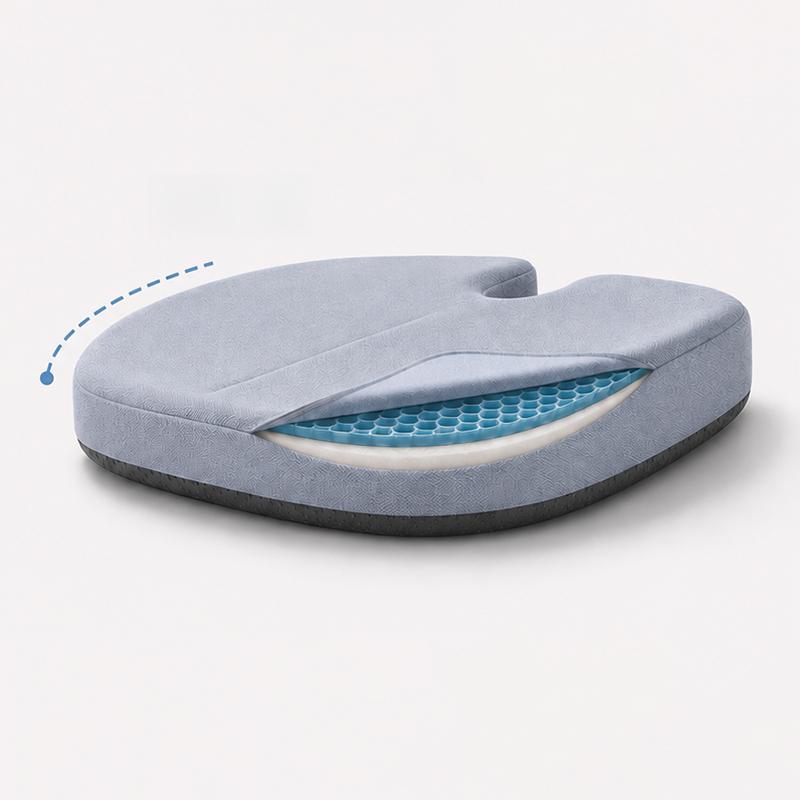
Different designs serve different purposes. A coccyx cushion may feature a rear cutout, a TPE cushion may use an open-grid structure, and a layered memory foam cushion may combine a cushioning core with a separate contact layer. Buyers should match the construction to the target application before comparing prices or requesting customized samples.
Top 5 Ergonomic Seat Cushion Manufacturers in China
|
Rank |
Manufacturer |
Location |
Main Products |
Suitable For |
|---|---|---|---|---|
|
1 |
Zhejiang Rina Home Technology Co., Ltd. |
Zhejiang |
TPE seat cushions, ergonomic cushions, memory foam and hybrid cushions |
Custom cushion structures and OEM/ODM projects |
|
2 |
Guangzhou Mingjie Household Products Co., Ltd. |
Guangdong |
Memory foam seat cushions, gel cushions, back-support cushions |
Retail and private-label cushion collections |
|
3 |
Yongkang Yiyoubao Technology Co., Ltd. |
Zhejiang |
Ergonomic seating products, lumbar-support cushions, posture-oriented seats |
Seating products requiring ergonomic shaping |
|
4 |
Shandong Haosong New Material Technology Co., Ltd. |
Shandong |
Polyurethane foam products, automotive seat components, foam cushions |
Foam components and customized seating products |
|
5 |
Lanurse Medical (Dongguan) Co., Ltd. |
Guangdong |
Pressure-management cushions, wheelchair cushions, nursing-care products |
Specialized seating and care-related applications |
This list offers a starting point for supplier evaluation rather than an independently audited ranking. Buyers should confirm the manufacturer's current product range, production arrangements, and suitability for the specific cushion design.
Zhejiang Rina Home Technology Co., Ltd.
Zhejiang Rina Home Technology Co., Ltd. develops TPE-based comfort products, including ergonomic seat cushions, TPE pillows, and mattresses. Established in 2015 and based in Huzhou, Zhejiang, the company supports customized product development involving material selection, structural design, mold development, and OEM/ODM manufacturing.
For ergonomic seat cushion projects, Rina's product development focuses on how cushion geometry and material construction work together. A flat cushion, a contoured cushion with a rear cutout, and a multilayer cushion provide different seating characteristics. Buyers can define the intended application first, then determine which structure, material, and surface profile fit the product requirements.
Rina offers ergonomic cushion designs using TPE, memory foam, gel, and hybrid constructions. Depending on the product brief, the cushion can feature a contoured seating surface, honeycomb structure, differentiated support zones, or a multilayer construction. Mold development is available for projects requiring a customized shape.
Material selection should reflect the intended seating environment:
- TPE: Flexible deformation and elastic recovery, with structure-dependent airflow through open-grid designs.
- TPE honeycomb: An interconnected grid that allows the cushion to deform under load while leaving open spaces within the structure.
- Memory foam: A pressure-responsive material that conforms to the contact area and changes shape under sustained loading.
- Gel and hybrid constructions: Options for combining different material characteristics within one cushion design.
The material and shape should be developed together. For example, a TPE cushion intended for extended office sitting may use an open structure and contoured seating surface, while a memory foam model may prioritize a different compression response. Buyers should assess the finished sample rather than assuming that one material is suitable for every seating application.
Seat cushion geometry affects how the body contacts the seating surface. A rear cutout may be incorporated into selected designs to reduce direct contact around the coccyx, while a shaped front edge can provide a gradual transition toward the thighs. Other designs may use different support zones or a wider contact surface.
Rina's customization discussions can cover:
- External dimensions: Length, width, thickness, and compatibility with the target chair.
- Seating profile: Flat, contoured, honeycomb, or customized geometry.
- Support areas: The position and shape of relief cutouts, recessed areas, and other structural features.
- Material properties: TPE structure, memory foam construction, or selected hybrid combinations.
- Cover and branding: Fabric, color, logo, label, and packaging requirements.
These details are particularly important for buyers developing a cushion under their own brand. A product intended for an office chair may have different size and attachment requirements from one intended for a car seat or wheelchair.
Rina supports OEM/ODM projects involving product dimensions, structure, materials, branding, and packaging. Buyers can discuss adapting an existing design or developing a new mold when the required contour cannot be achieved with an available structure.
A practical development process starts with a product brief that specifies the intended application, chair dimensions, preferred material, target thickness, support profile, and expected order volume. The supplier can then assess the proposed construction and prepare a sample for evaluation.
Before approving the design, buyers should check the finished dimensions, seating contour, material response, surface defects, and cover fit. If revisions are needed, document them clearly and request a revised sample before mass production. Tooling charges and sample-development costs should be separated from the recurring unit price in the quotation.
Rina reports monthly production capacity of 200,000 TPE pillows and 20,000 TPE mattresses. These figures relate to its stated TPE product capacity and should not be interpreted as confirmed seat cushion capacity. Buyers should request the available capacity and production schedule for the selected cushion model.
For repeat orders, quality inspection should focus on the characteristics that define the approved product:
- Dimensional accuracy: Measure length, width, thickness, and key contour points against the approved drawing.
- Structural consistency: Check grid openings, wall integrity, molded surfaces, and the shape of any relief cutouts.
- Material response: Compare compression and recovery with the approved sample using consistent test conditions.
- Cover workmanship: Inspect stitching, zipper operation, fabric fit, and label placement where applicable.
- Packing condition: Verify that the cushion is packed according to the agreed method and that compression packaging, if used, does not create unacceptable deformation.
Buyers should also agree on inspection criteria, acceptable tolerances, packaging specifications, and any applicable material-testing requirements before confirming the order.


Guangzhou Mingjie Household Products Co., Ltd.
Established in 2010, Guangzhou Mingjie Household Products Co., Ltd. produces memory foam seat cushions, gel cushions, lumbar supports, and other foam comfort products, with OEM/ODM services for private-label collections. Its broad memory foam range may suit buyers sourcing seat cushions alongside related home and travel comfort products.
Yongkang Yiyoubao Technology Co., Ltd.
Yongkang Yiyoubao Technology Co., Ltd. focuses on ergonomic seating products, particularly posture-oriented chairs and lumbar-support designs, supported by injection molding, assembly, and product development facilities. It is a potential option for buyers whose seating projects extend beyond standalone cushions to integrated ergonomic seating products.
Shandong Haosong New Material Technology Co., Ltd.
Shandong Haosong works with polyurethane foam materials and molded foam components for applications including automotive seating, machinery, fitness equipment, and other products. Its material and component focus may be relevant to buyers developing custom foam cushions or sourcing parts for larger seating assemblies.
Lanurse Medical (Dongguan) Co., Ltd.
Lanurse Medical specializes in care-related products, including wheelchair cushions and pressure-management products for users who need specialized seating support. Its focus on care environments distinguishes it from suppliers centered primarily on office and general household seat cushions.
Which Cushion Shape Matches the Intended Application?
The first step is to define where the cushion will be used and what seating requirements it must meet. Office chairs, vehicle seats, wheelchairs, and home seating differ in seat dimensions, available clearance, attachment methods, and expected use conditions.
A rear cutout may be appropriate for selected coccyx-relief designs, while a flat cushion may suit applications where a simple seating pad is required. Contoured models can incorporate shaped contact areas, and open-grid structures may allow air to move through the cushion. Buyers should assess the actual product geometry and sample performance rather than relying on labels such as "ergonomic" alone.
How Should Buyers Choose Between TPE and Memory Foam?
TPE and memory foam behave differently under load. TPE cushion designs can use elastic grid structures, while memory foam changes shape in response to pressure and may recover more gradually. The appropriate material depends on the target feel, structure, thickness, and product requirements.
|
Evaluation Factor |
TPE Cushion |
Memory Foam Cushion |
|---|---|---|
|
Construction |
May use an open-grid or lattice structure |
Usually uses a solid or layered foam core |
|
Response under load |
Depends on material hardness and grid geometry |
Depends on foam formulation, density, and firmness |
|
Airflow |
Open structures provide channels for air movement |
Depends on foam structure, perforations, and cover |
|
Design flexibility |
Grid geometry and molded contours can be customized |
Contour, foam layers, and cutout shapes can be customized |
|
Key checks |
Grid integrity, hardness, compression, and recovery |
Density, firmness, compression response, and recovery |
Buyers should compare physical samples under similar conditions and request measurable specifications for the selected material. Neither material automatically guarantees a particular level of comfort or pressure distribution.
What Dimensions and Structural Details Should Be Specified?
A product drawing helps manufacturers understand the required cushion shape and prevents confusion between the sample and bulk production. At minimum, the specification should include:
- Overall length, width, and thickness.
- The position and dimensions of any cutout or recessed area.
- The contour of the seating surface and front edge.
- Material type, firmness requirements, and relevant tolerances.
- Cover fabric, stitching, zipper, and attachment features.
- Logo placement, labels, packaging, and carton requirements.
If the cushion is intended to fit a particular chair or vehicle seat, provide the relevant seat measurements and clearance requirements. For molded or grid-based designs, include a drawing or approved reference sample that defines the structural geometry.
How Can Buyers Assess Cushion Durability?
A cushion's initial softness does not establish how it will perform after repeated use. Material compression, shape recovery, surface damage, and structural changes should be considered during product evaluation.
Request relevant test information for the chosen material and construction. For TPE models, inspect grid integrity and recovery after repeated compression; for memory foam models, assess the agreed compression and recovery characteristics. If the product has a cover, examine seam strength, zipper function, and fabric wear as separate quality checkpoints.
Agree on the test method and acceptance criteria before production. Any durability claims used in marketing should be supported by results relevant to the actual product design.