

How OEM Pillow Projects Transition From The Sampling Phase To Mass Production
May 12, 2026
Leave a message
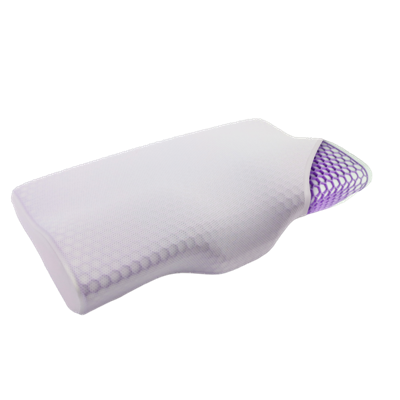
In OEM pillow manufacturing, the transition from sample approval to mass production is controlled by material consistency, mold repeatability, packaging compression behavior, and sewing tolerance stability. For TPE sleep products, small changes in density, airflow structure, or fabric tension can alter rebound speed and surface support. At Rina, OEM pillow projects are typically divided into four stages: structure confirmation, prototype validation, process adjustment, and batch production verification.
Structure Definition Before Sampling
The sampling stage starts with structural definition rather than appearance discussion. Buyers usually provide target dimensions, sleeping position requirements, packaging limitations, and surface feel references. For a honeycomb TPE pillow, the internal grid geometry determines airflow resistance and compression recovery. Grid wall thickness may vary between 1.5 mm and 3 mm depending on the support target.
For side-sleeper configurations, engineers usually increase shoulder support zones by adjusting local cell density near the edge structure. For back sleepers, the central contact area is flattened to reduce cervical pressure concentration. These changes are implemented directly in the mold cavity instead of relying only on material softness.
At this stage, engineers also confirm:
pillow height after rebound
compressed package dimensions
outer fabric shrinkage rate
zipper position
washing requirements
container loading orientation
These parameters affect tooling and packaging decisions before production starts.
Material Validation During Prototype Production
Prototype production focuses on material behavior under repeated deformation. TPE pillows behave differently from polyurethane foam because the elastomer structure transfers load through interconnected cell walls rather than foam collapse. During sampling, the production team measures:
rebound delay after compression
surface temperature retention
tensile deformation near edge zones
odor stability after thermal sealing
For cooling pillow projects, airflow channels are tested under continuous pressure simulation. If the honeycomb aperture is too small, airflow resistance increases and heat accumulates near the neck contact area. If the aperture is too large, the surface loses support stability during side sleeping.
Material batches are also checked for hardness deviation. In TPE molding, Shore hardness variation can influence support feel even when dimensions remain unchanged. Different export markets may request different firmness configurations depending on climate and consumer preference.
Mold and Sewing Process Adjustment
After the prototype is approved, production engineers adjust the mold and sewing workflow for repeatability. In mass production, the largest deviation usually comes from:
uneven cooling after molding
fabric tension inconsistency
compressed packaging stress
edge deformation during storage
For removable pillow covers, sewing tolerance affects fit accuracy after compression recovery. If fabric shrinkage exceeds the designed tolerance range, wrinkles appear after unpacking. To control this, cover materials are pre-tested under washing and heat exposure conditions before bulk cutting.
At Rina's production facility, mold structure and fabric assembly are coordinated with packaging dimensions. Roll-pack compression force must remain within the recovery limit of the TPE structure. Excessive compression may permanently deform airflow channels or reduce rebound speed after long-distance shipping.
Compression Packaging Verification Before Bulk Orders
Before mass production starts, the packaging system is validated using shipping simulation tests. OEM buyers usually evaluate:
rebound time after unpacking
corner deformation
carton compression resistance
moisture protection during sea freight
For vacuum-compressed pillows, recovery testing is performed after extended storage periods. Engineers monitor whether the internal honeycomb structure restores evenly across the full surface area. Uneven recovery may indicate excessive compression ratio or unstable wall thickness inside the molded structure.
Container loading efficiency is also reviewed during this phase. Pillow dimensions directly influence carton stacking density and shipping cost per unit. In some projects, reducing package thickness by several millimeters can increase container quantity significantly during high-volume export shipments.
Batch Consistency During Mass Production
Mass production control focuses on keeping structural consistency between approved samples and shipment batches. In TPE pillow manufacturing, dimensional stability depends on:
mold temperature control
cooling duration
raw material viscosity
fabric cutting precision
Production teams typically inspect:
finished height deviation
edge symmetry
airflow cavity integrity
zipper alignment
surface rebound response
If a pillow structure contains multiple density zones, operators must control material distribution carefully during molding. Uneven filling can create asymmetric support areas that become noticeable during sleeping pressure tests.
For export projects, replacement management is also planned before shipment. OEM buyers often request spare cover production, barcode traceability, and packaging identification systems to simplify warehouse replacement and retail sorting.
Transition Efficiency Depends on Engineering Coordination
The transition from sampling to mass production is not controlled by appearance approval alone. It depends on whether the material structure, mold geometry, sewing workflow, and packaging compression can maintain the same physical behavior at production scale.
In TPE pillow manufacturing, the engineering process must stabilize:
airflow structure after repeated compression
rebound consistency after shipping
fabric fit after washing
dimensional recovery after vacuum packaging
Without process coordination between molding, sewing, and packaging stages, sample performance may not transfer into bulk production consistently.