

How to Choose a Functional TPE Pillow for Different Sleep and Product Applications
Oct 08, 2026
Leave a message
Choosing a functional TPE pillow is not simply a matter of selecting a soft or firm pillow. For brands, wholesalers, retailers, and product developers, the more important question is whether the pillow structure, material configuration, functional design, and customization options match the intended market and application.
TPE pillows can be designed with different grid structures, heights, contours, densities, and material combinations to address specific product requirements. This makes them suitable for developing differentiated sleep products rather than offering only a standard pillow shape.
For buyers sourcing functional TPE pillows, the key is to evaluate the product from both the user and manufacturing perspectives. The following guide explains the main factors to consider and how to work with a manufacturer when developing a functional TPE pillow for wholesale, private label, or OEM/ODM projects.
What Makes a TPE Pillow a Functional Pillow?
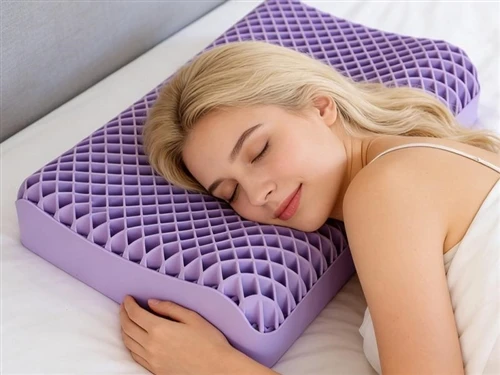
A functional TPE pillow is defined not only by its thermoplastic elastomer material but also by how the material is engineered into the final pillow structure.
A TPE pillow can incorporate a three-dimensional grid or other engineered structures to influence airflow, resilience, pressure distribution, and overall support. Pillow height, contour, grid configuration, surface design, and material combination can also be adjusted according to the intended application.
This means that two TPE pillows can use the same basic material while providing very different product experiences.
When evaluating a functional TPE pillow, buyers should therefore consider:
- TPE material formulation and structure
- Grid size and configuration
- Pillow height and contour
- Airflow and ventilation design
- Pressure distribution characteristics
- Resilience and recovery
- Combination with other materials
- Custom mold development capability
The right combination depends on the target users, sales channel, product positioning, and application.
Key Factors When Choosing a Functional TPE Pillow
Consider the Intended Sleep Position
Sleeping position is one of the first factors to consider when developing or selecting a pillow.
Side sleepers may require a different pillow height and contour from back sleepers because the distance between the head and mattress varies. A product intended for back sleepers may therefore use a lower or differently contoured structure, while a product for side sleepers may require additional height or support.
For manufacturers and brands developing their own pillow collections, this creates opportunities to develop multiple functional models using different structural configurations rather than relying on one universal design.
Evaluate Airflow and Ventilation
Ventilation is an important consideration for pillows designed for users who prefer a cooler and more breathable sleeping environment.
The open structure of a TPE grid can create air channels within the pillow. Compared with a solid structure, the geometry of the grid can provide more space for air movement around the sleeping surface.
However, buyers should not evaluate ventilation based only on the material name. Grid geometry, thickness, density, surface configuration, and the overall pillow construction can all influence airflow.
For this reason, manufacturers with experience in TPE structural design are important partners when developing a functional pillow for a ventilation-focused product line.
Look at Pressure Distribution and Support
A functional pillow should also be evaluated according to how its structure interacts with the user's head and neck.
TPE structures can be engineered to provide elastic support while allowing controlled deformation under pressure. Different grid patterns and densities can be considered when developing products with different support characteristics.
For buyers, it is useful to define the intended support level before production. Instead of simply asking for a "soft" or "firm" pillow, buyers can provide requirements related to:
- Intended sleeping position
- Pillow height
- Support preference
- Target user group
- Product positioning
- Desired combination of materials
These specifications give the manufacturer a clearer basis for product development and sampling.
Choosing a Functional TPE Pillow for Different Applications
The most suitable configuration depends on where the product will be sold and how it will be used.
Home Sleep Products
For general home sleep products, buyers may prioritize a balance between comfort, breathability, resilience, and appearance.
A TPE grid structure can provide a distinctive product construction while giving brands an opportunity to differentiate their pillow range from conventional fiber-filled products.
For this segment, buyers should pay particular attention to the overall structure, pillow height, surface feel, and packaging requirements.
Ergonomic Sleep Products
For ergonomic product lines, structural design becomes more important.
Different pillow heights and contours can be developed for different sleeping positions and support preferences. A manufacturer with mold development capabilities can help convert the required shape into a repeatable production structure.
This is particularly relevant for brands that want to build a product range around specific ergonomic concepts rather than simply reselling an existing pillow.
Cooling-Oriented Pillow Products
For products positioned around a cooler or more breathable sleeping experience, ventilation should be considered together with the TPE structure.
An open grid can help create internal air channels, while the overall construction can be designed around the intended airflow characteristics.
If a brand wants stronger product differentiation, TPE can also be combined with other materials in a hybrid construction, depending on the required performance and product design.
Hotel and Project Applications
Hotel and project buyers often have different priorities from consumer brands. Consistency, production capacity, packaging, specifications, and supply coordination can become important purchasing criteria.
A standardized TPE pillow configuration can be developed for larger-volume projects, while packaging and labeling can be adapted to the buyer's requirements.
For project procurement, buyers should confirm production capacity, quality-control procedures, packaging specifications, lead time, and export requirements before placing a bulk order.
Private Label and E-Commerce Products
Private-label brands often need a product that is visually and functionally differentiated from standard market offerings.
TPE pillow structures provide opportunities for customization through:
- Pillow shape
- Grid structure
- Height
- Surface design
- Material combination
- Packaging
- Labels and branding
For e-commerce brands, these elements can be developed as part of a complete product concept rather than treated as separate purchasing decisions.
TPE Pillow vs. Conventional Pillow Materials
TPE should not simply be described as "better" than every traditional pillow material. Different materials have different characteristics and applications.
The main advantage of TPE for functional pillow development is the design flexibility provided by its engineered structure.
A TPE pillow can use a grid-based construction to support ventilation and elastic response, while other materials may rely on foam, fiber filling, or other structural methods.
For buyers, the more useful comparison is therefore not simply "Which material is best?" but:
Which material and structure are most suitable for the product I want to develop?
This approach helps brands avoid selecting a material based only on marketing claims and instead evaluate the complete product configuration.
What Should You Ask a Functional TPE Pillow Manufacturer?
Before selecting a supplier, buyers should clarify several manufacturing questions.
Can the Pillow Structure Be Customized?
Ask whether the manufacturer can adjust the pillow shape, height, grid structure, or other design elements.
Can a New Mold Be Developed?
Custom mold development is particularly important when a brand wants a proprietary pillow structure rather than an existing catalog model.
Can Different Materials Be Combined?
Some functional pillow concepts may require a combination of TPE and materials such as memory foam. Confirm whether the manufacturer has experience with the required construction.
What Testing and Certifications Are Available?
Testing and certification requirements depend on the destination market and specific product. Buyers should confirm which documents and test reports are applicable to the selected model and material configuration.
What Are the MOQ and Production Lead Time?
MOQ and lead time can directly affect product launch schedules and inventory planning. These should be confirmed before sample approval.
Can Packaging and Private Labeling Be Customized?
For branded products, buyers should confirm options for labels, packaging, inserts, cartons, and other brand-specific requirements.
Why Choose RINA for Functional TPE Pillow Development?
Zhejiang Rina Home Technology Co., Ltd. focuses on TPE-based sleep and comfort products and provides manufacturing support for brands, wholesalers, retailers, and product developers.
One of RINA's key advantages is its focus on TPE product development rather than treating TPE simply as a material option. The company can support the development of different structural concepts according to the intended product application.
Custom Mold Development
For buyers who need a differentiated product, mold development can be an important part of the project. RINA can support custom mold development so that brands can work toward a product structure aligned with their own specifications.
OEM and ODM Support
RINA supports OEM and ODM projects, allowing buyers to develop products based on existing concepts or work toward customized designs.
Customization can involve product structure, material configuration, packaging, and branding according to project requirements.
Large-Scale Production Capability
RINA has a production capacity of up to 200,000 TPE pillows per month, providing a foundation for larger wholesale, private-label, and project orders.
For buyers planning a long-term product line, production capacity should be evaluated together with quality control, sampling, packaging, and delivery coordination.
TPE Product Expertise
RINA's product range focuses on TPE-based pillow and comfort products, allowing buyers to discuss different structural concepts instead of being limited to conventional pillow constructions.
Depending on the project, product development can involve grid structures, ergonomic configurations, hybrid material designs, and other functional concepts.
A Practical Process for Developing a Custom Functional TPE Pillow
For brands planning a new product, a structured development process can reduce unnecessary revisions.
Step 1: Define the Target Application
Identify the intended users, sleeping position, sales channel, and product positioning.
Step 2: Define Functional Requirements
Determine the desired pillow height, support characteristics, ventilation concept, material combination, and appearance.
Step 3: Review the Structure
Work with the manufacturer to evaluate the proposed TPE structure and determine whether a new mold is required.
Step 4: Develop Samples
Create prototypes for evaluation of dimensions, structure, feel, appearance, and other product requirements.
Step 5: Complete Testing and Approval
Carry out applicable testing and finalize the specifications according to the target market and order requirements.
Step 6: Confirm Packaging and Branding
Finalize labels, packaging, cartons, and private-label requirements.
Step 7: Move to Mass Production
After sample approval and specification confirmation, production can proceed according to the agreed order quantity and schedule.
Final Considerations for Buyers
Choosing a functional TPE pillow should start with the intended application rather than the material alone.
For home sleep products, ventilation, comfort, and overall structure may be important. For ergonomic products, pillow height and contour may receive greater attention. For private-label and wholesale products, customization, mold development, packaging, MOQ, and production capacity can become equally important.
The right manufacturing partner should therefore be able to support more than product supply. Buyers should look for capabilities covering TPE structural development, custom mold development, OEM/ODM production, quality control, packaging, and scalable manufacturing.
With TPE product development experience, custom mold support, OEM/ODM capabilities, and production capacity of up to 200,000 TPE pillows per month, Zhejiang Rina Home Technology Co., Ltd. can support brands and buyers developing functional TPE pillow products for different market applications.
Looking to Develop a Functional TPE Pillow?
Discuss your target application, pillow structure, customization requirements, and packaging needs with RINA to evaluate the right development approach for your project.
Develop Your Custom TPE Pillow